Introduction:
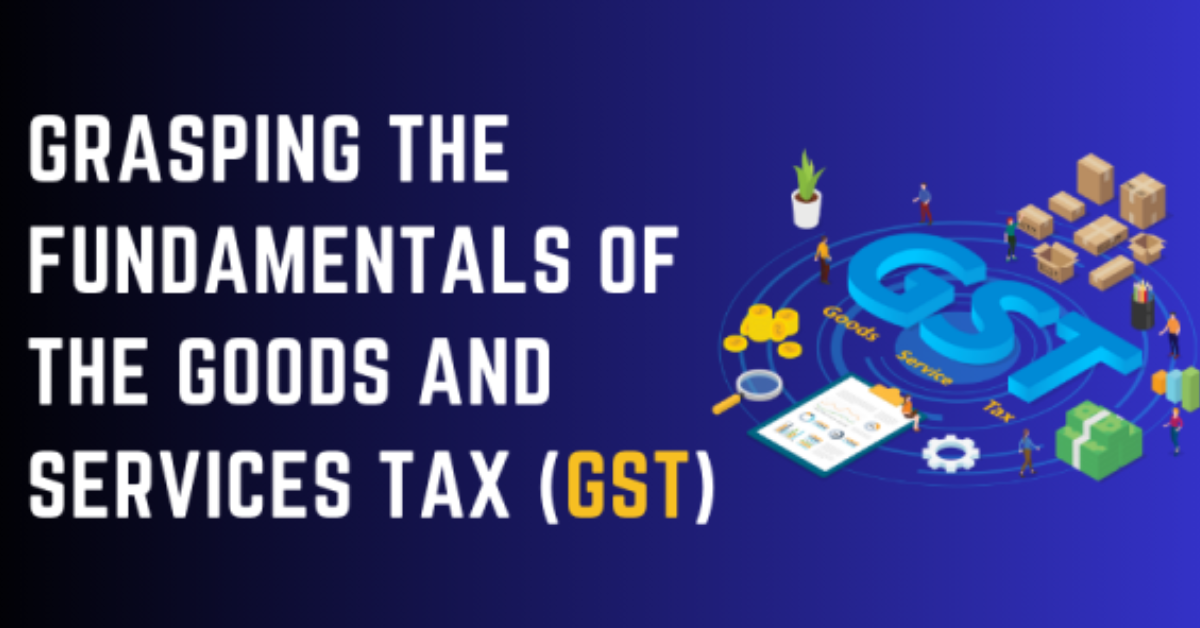
GST is a comprehensive indirect tax used on the supply of goods and services in several countries worldwide. It is intended to replace various cascading taxes and streamline the taxing structure. This page seeks to provide a thorough explanation of the fundamentals of GST, including its concept, objectives, main features, and operation. This blog discussed Grasping the Fundamentals of the Goods and Services Tax (GST). Join GST Training In Pondicherry at FITA Academy and gain more knowledge in GST.
Definition and Objectives of GST:
GST is a value-added tax levied at each stage of the supply chain on delivering goods and services. It covers all steps, from manufacturers to distributors to retailers, and ensures that taxes are only imposed on the value contributed at each stage. The basic goals of GST are to streamline the taxation structure, minimise the cascading effect of taxes, promote ease of doing business, assure transparency, and create a common national market.
Key Features of GST:
Single Tax Regime:
GST replaces many indirect taxes such as main excise duty, service tax, VAT, and various other state-level taxes, resulting in a unified tax structure. This streamlines compliance while also reducing the tax burden on businesses.
Dual GST Structure:
GST in India follows a dual model comprising the Central GST (CGST) levied by the central government and State GST (SGST) levied by state governments. This allows for revenue sharing between the central and state governments.
Input Tax Credit:
The GST eliminates the cascading impact, which enables businesses to claim input tax credits on taxes paid at earlier levels of the supply chain. This ensures that taxes are only assessed on the value added at each level. Join Tally Course in Bangalore, which offers certification training with 100% placement assistance.
Threshold Exemption:
Small businesses with an annual turnover of less than a certain amount are excluded from registering for and collecting GST. This threshold varies across countries and is meant to provide relief to small businesses.
Composition Scheme:
GST provides a composition plan for small taxpayers, allowing them to pay lower taxes based on their turnover. This strategy decreases the compliance load for small businesses.
Online Portal:
GST is implemented through a powerful online portal, allowing for a simple registration, return filing, and compliance processes. GST administration is made easier by using an internet platform like the GSTN in India.